TFSA Contribution Room 2026: How Much Can You Contribute?
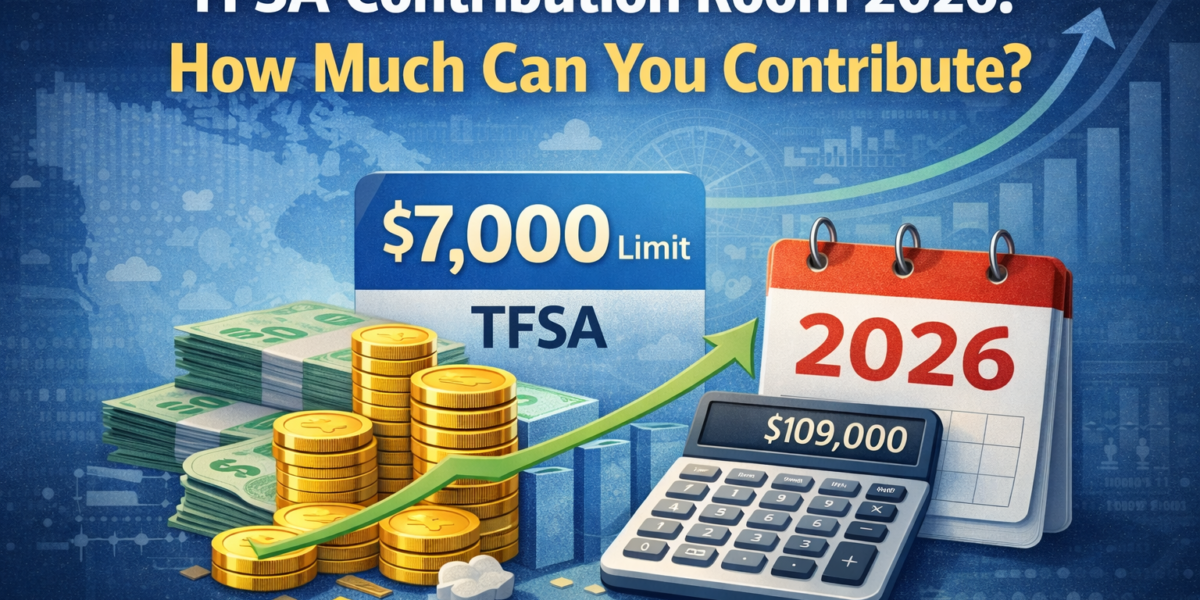
The 2026 TFSA limit is $7,000 — but your total available room could be much higher. Here’s exactly how contribution room works, how withdrawals affect it, and how to find your personal number.
The 2026 TFSA annual contribution limit is $7,000. The cumulative lifetime limit — for anyone who was 18+ and a Canadian resident in 2009 — is $109,000.
- Your personal room depends on when you turned 18, prior contributions, and past withdrawals
- Withdrawals restore room — but not until January 1 of the following year
- Over-contributions trigger a 1% per month CRA penalty
- Check your exact room at CRA My Account
What is TFSA contribution room?
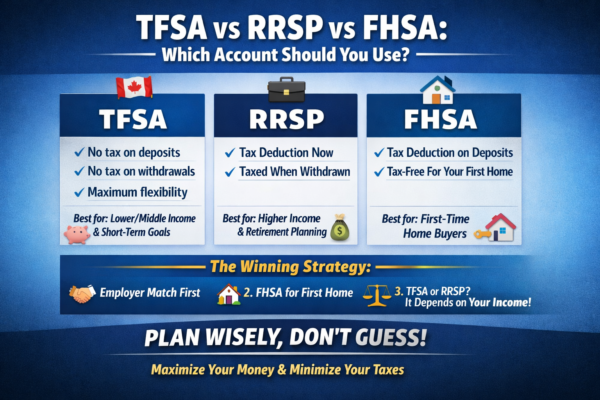
TFSA contribution room is the maximum amount you’re allowed to deposit into all your TFSAs combined in a given year. It’s not a bank limit — it’s a Canada Revenue Agency (CRA) limit that applies across every TFSA you hold, whether you have one account or five. Not sure whether a TFSA, RRSP, or FHSA is right for you? See our full comparison guide.
Your room is made up of three things:
- The annual TFSA dollar limit for the current year ($7,000 in 2026)
- Any unused room you’ve carried forward from previous years
- The total amount of any TFSA withdrawals you made in the previous calendar year
Investment growth inside your TFSA — interest, dividends, capital gains — does not count against your contribution room. Only actual deposits do.
Room accumulates automatically from the year you turn 18, even if you’ve never opened a TFSA. You don’t need to file a tax return for room to build up.
The 2026 TFSA contribution limit
(eligible since 2009)
The $7,000 annual limit has held steady for the third year in a row (2024, 2025, and 2026). The limit is indexed to inflation and adjusted in $500 increments, so it only moves when enough inflation accumulates to cross that threshold.
The cumulative lifetime limit of $109,000 applies if you were 18 or older in 2009 when the TFSA was introduced, and you’ve been a Canadian resident every year since. If you turned 18 after 2009, your total available room is lower — it starts from the year you became eligible.
TFSA limits by year: 2009 to 2026
| Year | Annual limit | Cumulative room (if never contributed) |
|---|---|---|
| 2009 | $5,000 | $5,000 |
| 2010 | $5,000 | $10,000 |
| 2011 | $5,000 | $15,000 |
| 2012 | $5,000 | $20,000 |
| 2013 | $5,500 | $25,500 |
| 2014 | $5,500 | $31,000 |
| 2015 | $10,000 | $41,000 |
| 2016 | $5,500 | $46,500 |
| 2017 | $5,500 | $52,000 |
| 2018 | $5,500 | $57,500 |
| 2019 | $6,000 | $63,500 |
| 2020 | $6,000 | $69,500 |
| 2021 | $6,000 | $75,500 |
| 2022 | $6,000 | $81,500 |
| 2023 | $6,500 | $88,000 |
| 2024 | $7,000 | $95,000 |
| 2025 | $7,000 | $102,000 |
| 2026 | $7,000 | $109,000 |
Note: The cumulative figures assume you were eligible in 2009, have been a Canadian resident every year, and have made zero contributions.
What if I turned 18 after 2009?
Your cumulative room starts from the year you turned 18, not 2009. Use the table above to add up the annual limits starting from your eligibility year. For example, if you turned 18 in 2018, your 2026 cumulative room (if you’ve never contributed) is $57,500 — the total of the 2018 through 2026 annual limits.
How TFSA contribution room works
Room carries forward — indefinitely
Unlike some accounts with use-it-or-lose-it rules, unused TFSA room accumulates year after year with no expiry. If you’ve never contributed, or you’ve contributed less than the maximum in past years, that unused room is still available to you.
Withdrawals restore room — but not right away
This is the rule that trips up most Canadians: when you withdraw money from your TFSA, that amount is added back to your contribution room on January 1 of the following year — not immediately.
You withdraw $5,000 from your maxed-out TFSA in August 2026. You can’t re-contribute that $5,000 until January 1, 2027. Re-contributing it before year-end would be an over-contribution, triggering a penalty — even though the money was previously in the account.
Investment gains don’t count
Your investments grow tax-free inside the TFSA, and that growth has no impact on contribution room whatsoever. If you contributed $7,000 and it grew to $12,000, you still have $7,000 worth of room restored if you withdraw the full amount — not $12,000.
The same rule applies in reverse: if your $7,000 investment dropped to $4,000 and you withdrew it, you only get $4,000 of room back the following year. Losses inside a TFSA are not recoverable.
Real-world contribution room examples
Maya, 38 — contributed every year since 2009
Maya has maxed her TFSA every year since she became eligible in 2009. She made no withdrawals in 2025.
Available room in 2026: $7,000 (the 2026 annual limit only)
Jordan, 31 — opened a TFSA for the first time in 2026
Jordan turned 18 in 2013 but never got around to opening a TFSA. He opens one in January 2026.
Available room in 2026: $83,500 (cumulative from 2013 through 2026)
Priya, 45 — withdrew $15,000 in 2025 to cover a renovation
Priya had been maxing her TFSA for years. In September 2025, she withdrew $15,000. She has not re-contributed yet.
Available room in 2026: $7,000 (2026 new room) + $15,000 (2025 withdrawal restored) = $22,000
David, 22 — became a Canadian resident in 2023
David moved to Canada in 2023 at age 22. TFSA room only accumulates from the year you become a Canadian resident, regardless of your age.
Available room in 2026: $6,500 (2023) + $7,000 (2024) + $7,000 (2025) + $7,000 (2026) = $27,500
Newcomers to Canada
If you immigrated to Canada, your TFSA contribution room starts from the year you become a Canadian resident — not from 2009, and not from your 18th birthday if that was before you arrived. You must also have a valid Social Insurance Number (SIN).
One important nuance: room accumulates from the year you turned 18 or from the year you became a resident, whichever is later. So a 30-year-old who moved to Canada in 2025 accumulates room starting in 2025, not retroactively from 2009 or from when they turned 18 abroad.
Non-residents of Canada cannot contribute to a TFSA. If you leave Canada and become a non-resident, you can keep your existing TFSA open and keep the investments — but you can’t contribute, and any contributions made while a non-resident are subject to a 1% per month penalty tax.
Over-contributions: the penalty you want to avoid
The CRA charges a 1% per month tax on the highest excess TFSA amount in each month that the over-contribution remains in your account. There’s no grace period and no $2,000 buffer like there is with RRSPs.
For example: if you over-contribute by $3,000 and it stays in your account for 4 months, you owe $3,000 × 1% × 4 = $120. The penalty accumulates until you withdraw the excess amount.
To correct an over-contribution, withdraw the excess as soon as possible and file Form RC243 (TFSA Return) with the CRA. You may also need to pay the accumulated penalty.
The CRA’s My Account shows your contribution room as of January 1, updated after financial institutions report transactions from the prior year. It does not reflect contributions you’ve made so far in 2026. Always track your own contributions — don’t rely on CRA My Account as a real-time balance.
How to check your TFSA contribution room
The most accurate way to check your personal contribution room is through the CRA — but you need to account for any contributions or withdrawals you’ve already made in the current year, since those won’t be reflected yet.
- Log in to CRA My Account at canada.ca. Under “RRSP and savings plans,” select “Tax-free savings account (TFSA).” You’ll see your contribution room as of January 1, 2026.
- Subtract any 2026 contributions you’ve already made this year. These won’t be in the CRA system yet, but they count against your room immediately.
- Add back any 2025 withdrawals that haven’t been reflected yet (CRA typically processes prior-year transactions by April of the following year).
- The result is your true available room. When in doubt, keep a personal spreadsheet tracking every contribution and withdrawal with dates.
You can also call the CRA Tax Information Phone Service (TIPS) at 1-800-267-6999 to hear your contribution room balance read out.
Can you have multiple TFSAs?
Yes. You can hold TFSAs at as many financial institutions as you like — one for GICs, one for ETFs, one for a high-interest savings account. Many Canadians do this to separate short-term savings from long-term investments.
The key rule: your total contributions across all TFSAs combined cannot exceed your contribution room. The limit is not per account — it’s per person. This is your responsibility to track, not the bank’s.
3 TFSA contribution room tips from a CPA
1. Contribute early in the year
Room resets on January 1. Every day your money sits outside your TFSA is a day it isn’t growing tax-free. Contributing a lump sum at the start of the year rather than waiting until December gives your investments more time to compound. Looking for ways to free up money to contribute? Our Canadian savings guide has practical starting points.
2. Don’t withdraw just to re-contribute
Some people withdraw TFSA funds with the intention of re-depositing after a market dip. Unless you have unused room available, you cannot re-contribute in the same calendar year without creating an over-contribution. Plan withdrawals carefully — especially near year-end.
3. Consider a December 31 withdrawal strategically
If you know you’ll want to re-contribute a withdrawn amount, make the withdrawal before December 31. That gives you the room back on January 1 — one day later. Withdrawing on January 1 instead means waiting an entire extra year to restore that room.
Frequently asked questions
Disclaimer: This article is for educational purposes only and does not constitute personalized financial or tax advice. Contribution rules may change. Always verify your personal contribution room with CRA My Account and consult a qualified tax professional for advice specific to your situation.